
Name Spinner
- Quiz Team Picker
Quiz Team Picker — Balanced Groups for Review Games
Form trivia and quiz teams fairly with a free classroom spinner. Demo roster — balanced groups, review games, and no repeat team drama.
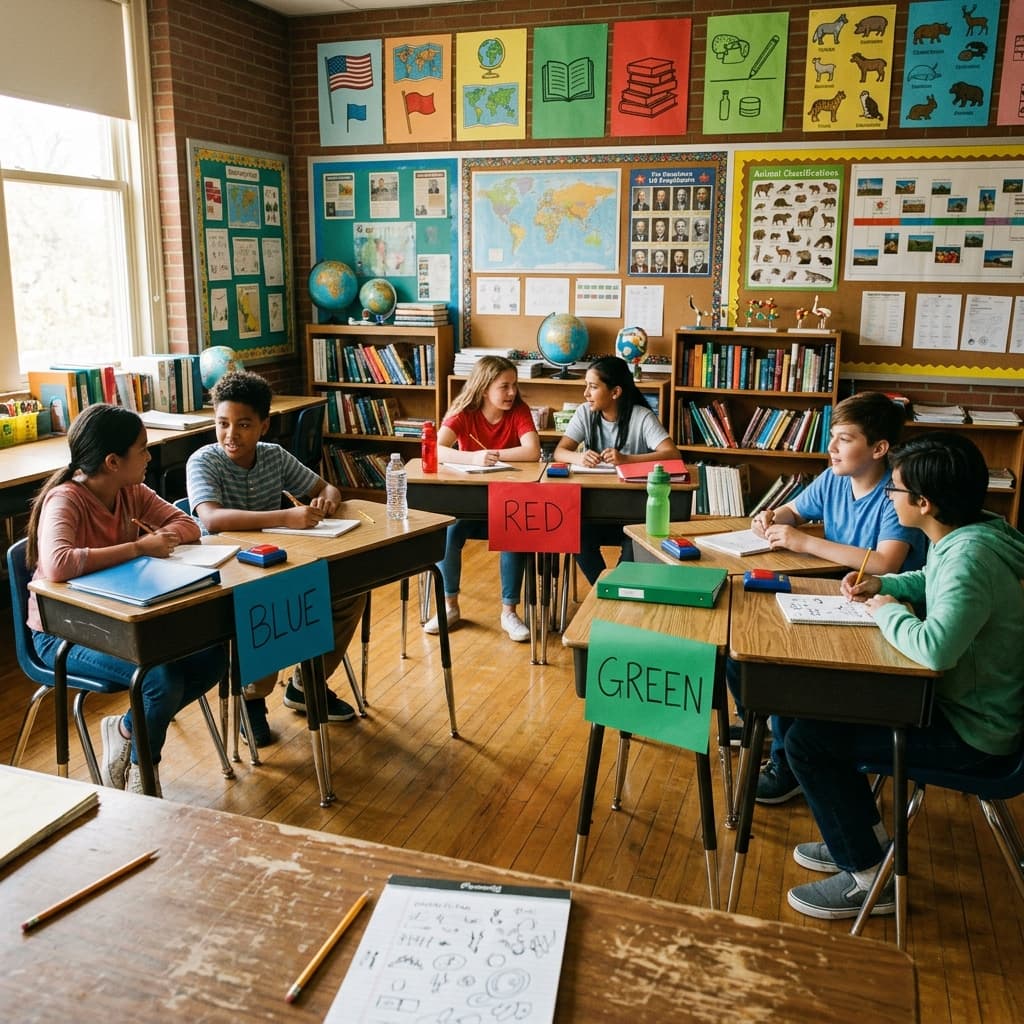
Review games fall apart without fair teams
Jeopardy-style units, trivia Fridays, and pre-test review sessions all share one failure mode: team picking takes longer than the game. Students cluster with friends, ability groups form by accident, and someone announces the teams are "unfair" before the first question. A quiz team picker does not magically balance skill — but it randomizes social clusters so nobody credibly claims you stacked teams on purpose.
The Quiz Team Picker embed below spins one name at a time from the demo roster. Run it sequentially: spin, assign to Team A, spin, assign to Team B, continue until rosters fill. Alternating assignment is the classic teacher move for rough balance when you are not using a dedicated group-size tool. For fixed team counts, spin N times per team or use our group generator when you need automatic buckets.
Balanced groups serve review games, not high-stakes grading. Keep stakes low — participation points, bragging rights, sticker economy — so random teams feel playful. When a unit test follows, consider mixed-purpose teams labeled "review crews" rather than "Team 1 wins everything," which reduces anxiety for students who struggle on tests but shine in games.
Substitutes running a planned trivia hour inherit your team logic when the sub plan says: "Spin names alternating A-B-A-B into four teams of five." Link the homepage roster so the sub does not reconstruct groups from memory. Students respect spins they watched build in homeroom; mystery teams from a guest teacher invite pushback.
- Timing tip: Post team columns on the board before spinning so the helper writes names in real time — delays kill hype.
- Noise management: Team formation is loud; spin during the last two minutes of independent work with a visual timer so transition feels expected, not chaotic.
Accommodations: A student who processes slowly may need a defined team role before questions start — reader, timekeeper — so random teams do not strand them without a job. Tell teams roles are assigned, not volunteered, for the first round at least.
Repeat classes: If you teach multiple sections, spin per section — never reuse one section's teams in another unless rosters identical. Students talk; perceived favoritism crosses periods.
| Pattern | How it works |
|---|---|
| Alternating A/B | Spin 1 → Team A, spin 2 → Team B, repeat |
| Round-robin four teams | A, B, C, D, A, B… until full |
| Captain first | Spin four captains, then snake draft with remaining spins |
| Pair then merge | Spin pairs, then combine pairs into fours |
| Single elimination sides | Two big teams for head-to-head trivia |
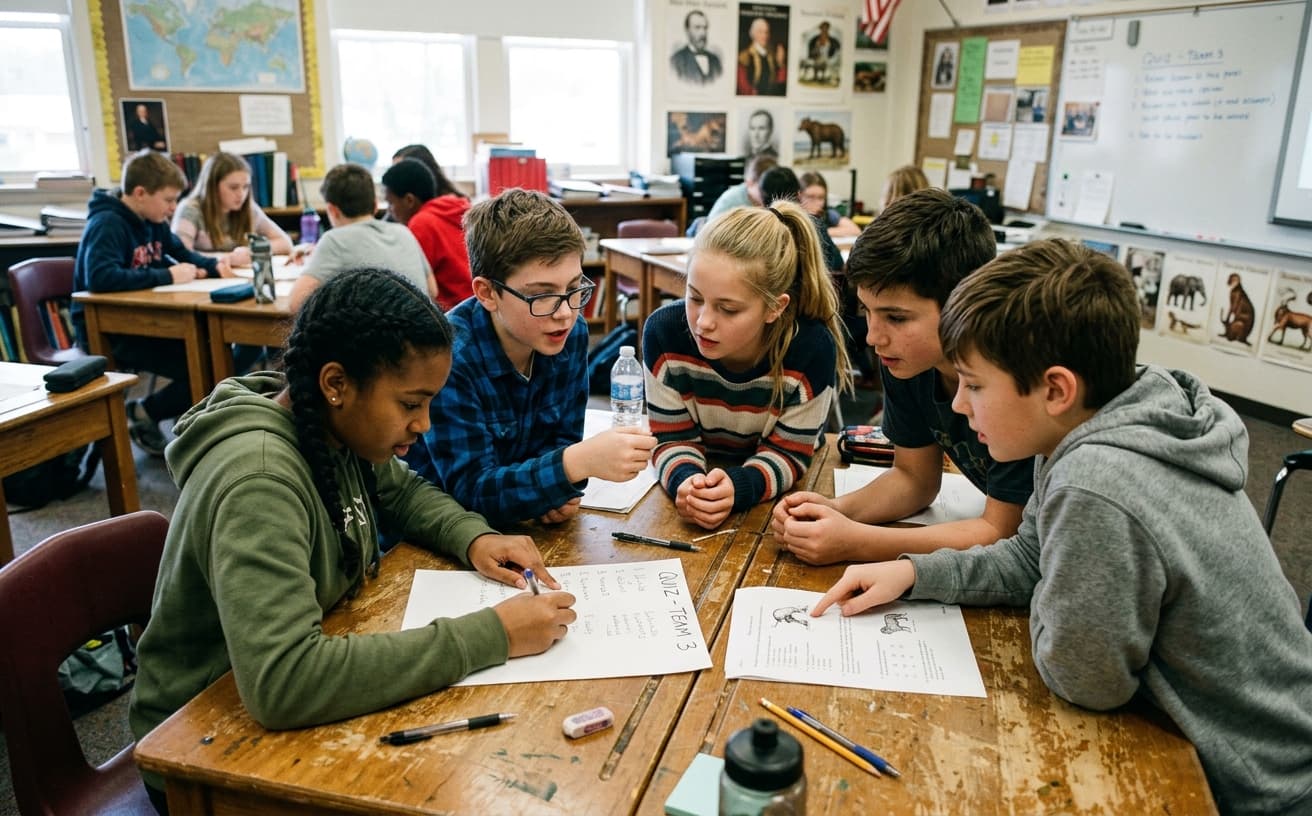
Trivia teams and academic talk
Trivia rewards fast recall; review games should reward collaboration. Require whisper time before answers so random teams talk to each other instead of letting one vocal student dominate. Rotate spokesperson duty inside the team — after each question, the next seat clockwise reports — so quiz team picks spread airtime, not just grouping.
Ability balance is imperfect with random spins. If you need approximate tiers, split the roster into three bands privately, spin within each band into teams, then shuffle one student between teams manually — still faster than full manual grouping and more transparent than secret sorting. Never label tiers in front of the class; students should see spins, not tracks.
Re-spin culture kills games. State rules upfront: teams lock after the last spin unless someone is absent — then one replacement spin from the leftover pool. No re-spin because friends landed apart; that negotiation belongs in recess, not in a five-minute review window.
English learners and shy students: Assign roles — reader, writer, buzzer — so team membership implies a job, not sudden performance pressure. The picker chooses who works together; you define how they work together.
End-of-unit reflection: Ask teams what strategy worked. Random grouping becomes a metacognition prompt — "We did not choose each other; how did we listen anyway?" — which is worth more than the points on the board.
Illustrative quiz team math (22 students)
5 teams + 2
Teams of 4
Spin leftovers into a rotating bench pool
4 teams + 2
Teams of 5
Bench students switch teams each round
20
Spins to fill four teams of five
Plus policy for two remaining names
22
Demo roster
Replace with your class on the homepage
Five-minute team formation
Minute 0
Announce team count and alternating assignment pattern.
Minutes 1–3
Spin sequentially; student helper writes names on board columns.
Minute 4
Handle absences — drop or replace from bench pool.
Minute 5
Teams move to tables; first question displays.
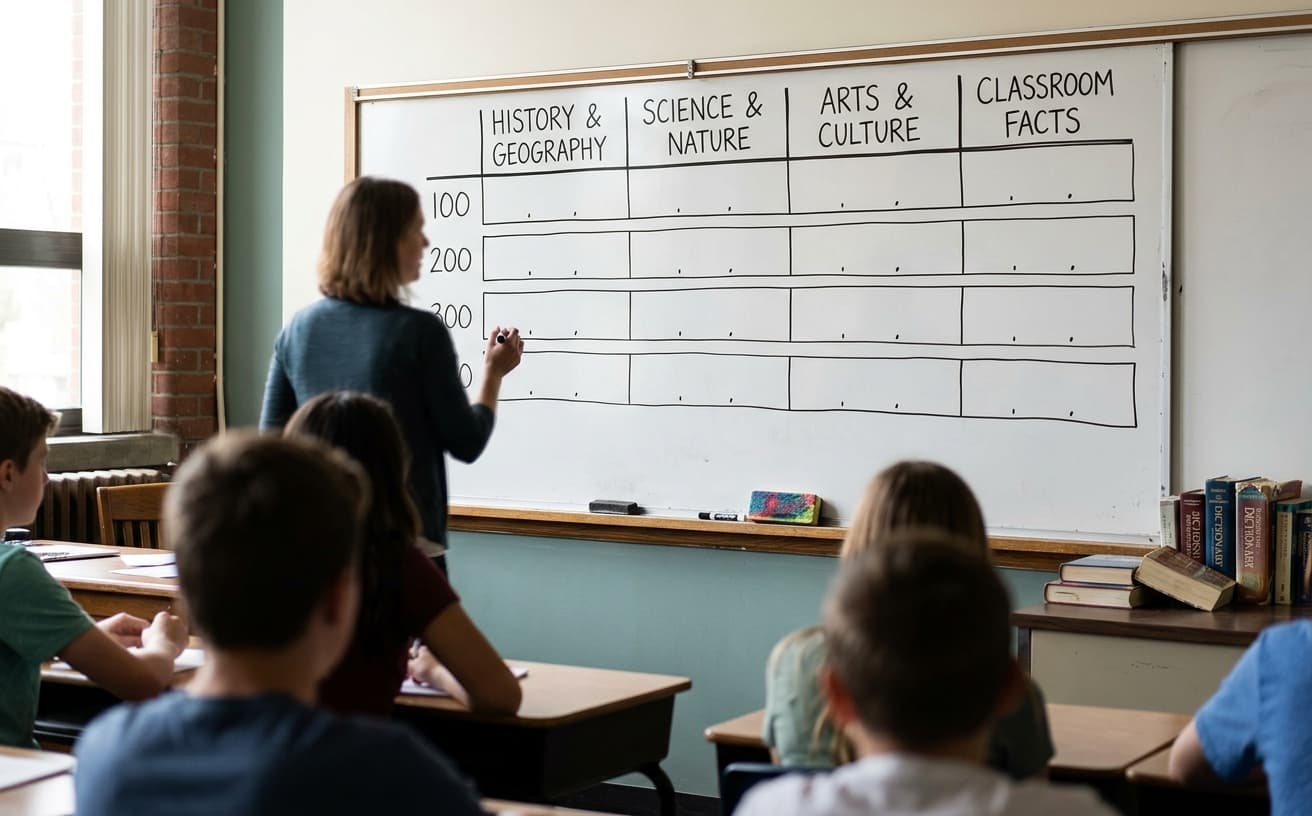
Review games that respect the spin
- Lightning round: Short questions, fast rotation of spokesperson.
- Whiteboard relay: Runners must confer before writing.
- Confidence betting: Teams wager points after group agreement — encourages quiet members to speak.
- Category board: Each team owns columns spun randomly at start.
When games run weekly, auto-exclude previous teammates for one cycle so students work with new peers over the month. Track last week's teams on paper; homepage history helps if you spin digitally every time.
- Subs: Leave question slides and team columns blank — sub spins names, students fill columns.
- Co-teachers: One spins, one monitors behavior — split labor keeps eyes on the room during the excitement spike.
Common questions
Odd number left over? Bench pool rotates in each round, or form one team of three with bonus points handicap — declare before spinning.
Behavior pairings you cannot accept? Swap one pair after spins complete, privately, without re-spinning the whole class — use sparingly.
Same teams every Friday? Auto-exclude prior teammates or spin fresh each session — pick one and tell the class.
Quiz teams built in the open teach fair process. When the wheel assigns groups, the game can start — and learning gets the minutes you almost lost to arguing.
Cross-curricular review — science vocabulary plus social studies dates — works when teams stay random. Content integration should not become social sorting. Spin first, then distribute question packets so no team previews unit emphasis.
Competitive vs cooperative scoring: Class total beating a teacher-set threshold removes inter-team hostility when random groups include rivals. Announce scoring model before spins so football friends on opposite teams still cheer aggregate progress.
Digital review games with buzzers still need physical teams. Spin before opening laptops — teams sit together, buzzer apps assigned by seat. Subs running Kahoot-style sessions inherit team names on the board from your Monday spins.
Post-game debrief: Two minutes — "What helped your team listen?" — turns random grouping into SEL without a separate lesson. Students name behaviors they control; teachers note strategies for Monday's academic talk norms.
Jeopardy-style board setup: Assign teams to pod colors before spinning content categories — random teams, fixed board. Subs appreciate color-coded pods matching board columns you leave in plan book.
Honors and mixed classes: When rosters blend levels, random teams still work if questions tier — each team selects difficulty per turn. Spin assigns people; game design assigns challenge.
Timer discipline: Five-minute team formation cap — when timer ends, unassigned names land in smallest team automatically. Prevents twenty-minute team drama before ten-minute review.
“Lock teams after the last spin — review games need momentum more than perfect friend clusters.”
Need fixed group sizes?
When you want automatic buckets instead of alternating spins, try the group generator workflow.
Group generator for classroom →Build your own spinner wheel
Paste any list, import a class roster, save history, and share a link — free on the Name Spinner homepage. No account required.
Open full Name Spinner →Related guides
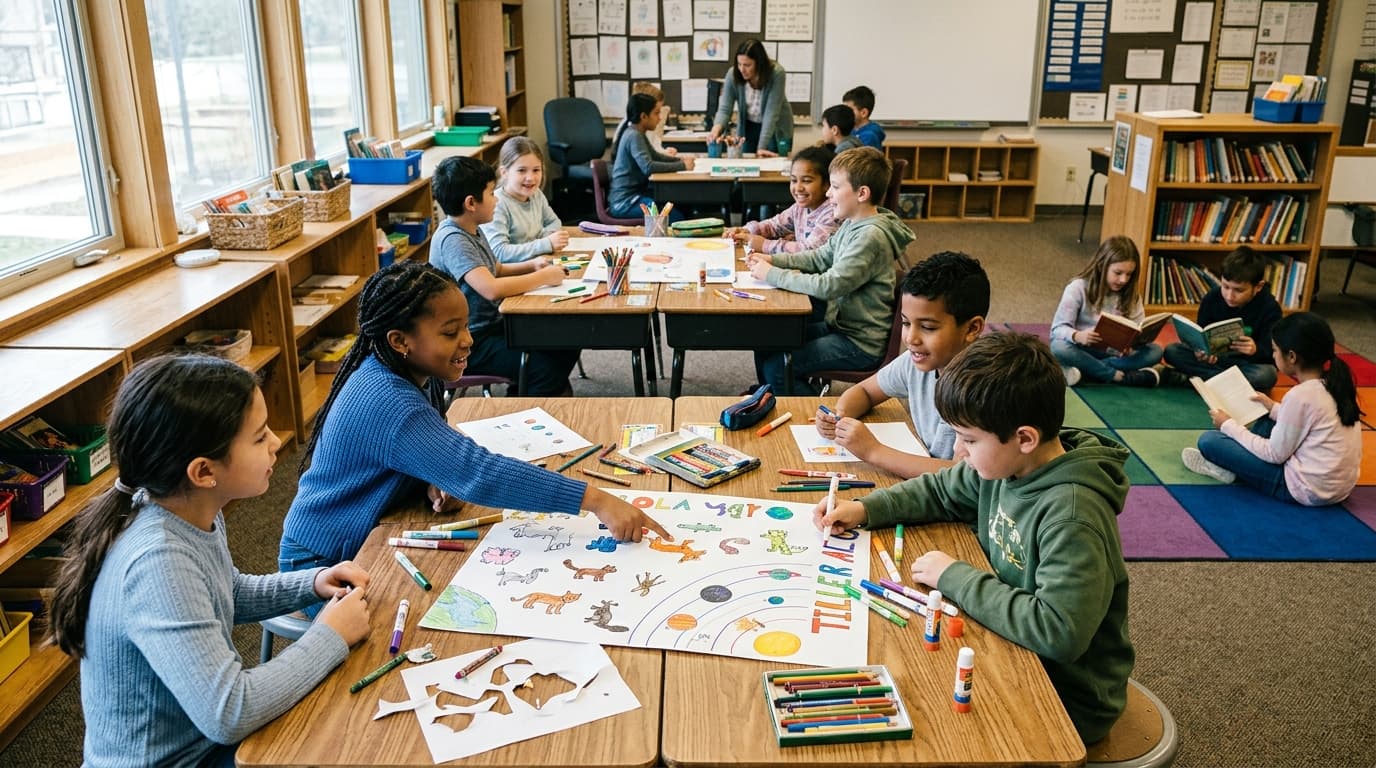
Classroom Group Work Spinner Guide
Assign fair student groups with a classroom group work spinner — visible random teams, no signup, and share links for subs. Demo roster ready to spin.
In-page spinner

By Name Spinner
Desk Partner Switch — Seating Rotation Picker
Rotate desk partners fairly with a free classroom spinner — collaboration pairs, seating rotation, and fresh groupings without manual charts.
In-page spinner
By Name Spinner
Classroom Group Generator Spinner
Split a class into random groups with a free spinner wheel. Demo roster included — paste your students on the homepage for fair team picks.
In-page spinner
By Name Spinner
Presentation Order Picker — Random Order for Class
Set random presentation order with a free classroom spinner. Demo roster included — paste your students on the homepage for fair, transparent speaking slots.
In-page spinner
By Name Spinner