
Name Spinner
- Desk Partner Switch
Desk Partner Switch — Seating Rotation Picker
Rotate desk partners fairly with a free classroom spinner — collaboration pairs, seating rotation, and fresh groupings without manual charts.
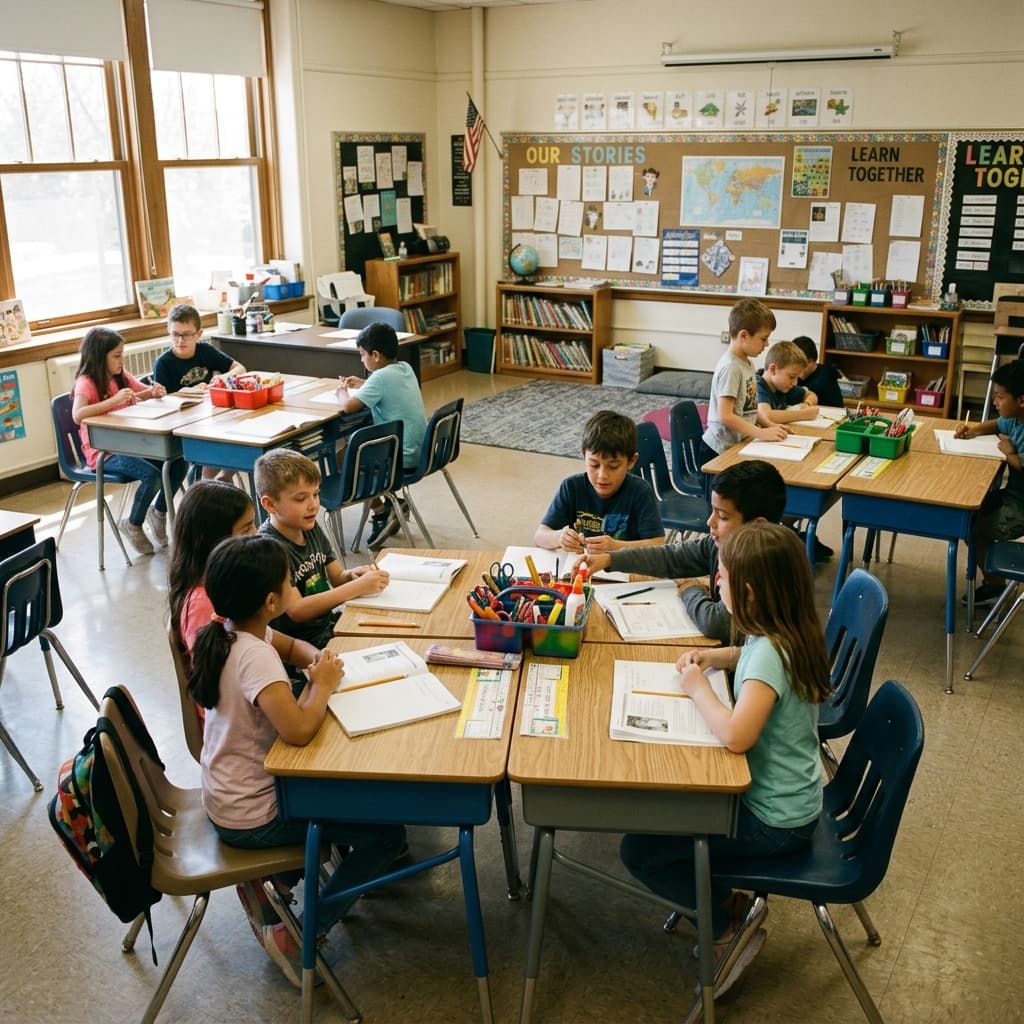
Seating rotation is collaboration policy, not punishment
Teachers change seats for many reasons — reduce off-task chat, mix ability levels, refresh groupthink before a project unit, accommodate IEP seating requirements. Manual partner charts take forever and look designed, which invites accusations of targeting. A desk partner switch via sequential spins creates collaboration pairs in front of the class: spin one name, spin a partner from remaining pool, repeat until everyone has a match or a triad.
The Desk Partner Switch embed spins one student at a time from the demo roster. Classic workflow: spin Student A, spin Student B from everyone left, pair them, remove both from pool, continue. Odd roster? Last spin forms a triad or joins a pair you designate as "flex group" — announce triad policy before starting so the last students are not surprised.
Seating rotation frequency depends on grade and content. Elementary might rotate monthly for turn-and-talk partners; middle school might rotate weekly during a debate unit. Document rotation dates so subs know pairs are intentional, not random chaos from yesterday.
Fixed front-row accessibility seats stay outside the spin for documented needs; spin everyone else, then place accessibility seats without breaking pairs you already formed. Transparency: "These seats are assigned; partners are spun."
U-shaped and table pods: Physical layout may not allow arbitrary pair placement — spin partners first, then assign pods by number. Students move to Pod 3, Pair B — geometry is logistics, pairing is fairness.
Conflict history: One private swap after spins beats public re-spin. Document swap reason for yourself; do not explain to class unless necessary. Next month fresh spin resets history.
Co-teaching: One teacher spins while other maps pairs to seating chart — parallel work finishes rotation before independent work begins. Split labor keeps eyes on behavior during movement.
Anchor students: Some classes designate flexible student who joins odd triads willingly — rotate anchor duty monthly so one child is not permanent add-on. Spin anchor role separately Monday.
Distance learning hangover: Students re-learned solo work habits — partner switches rebuild collaboration muscles gradually. First switch after long solo stretch includes extra structured talk time.
Noise during switch: Set three-minute move timer with music — procedural clarity reduces chaos. Partner list on board before desks move prevents mid-room negotiations.
Honor spin results: When you override spins often, system dies. Reserve overrides for safety and documented plans — not convenience.
Reading workshop pairs: Different from desk neighbors — reading partners may spin weekly while desk pairs stay monthly. Tell class which wheel serves which purpose to avoid "why two partners" confusion.
Testing days: Fixed seats for state tests; partner switch resumes after testing window. Announce pause so students do not think fairness disappeared permanently.
Community building: New semester first switch — icebreaker question pairs answer before content work. Random pair plus structured talk accelerates name learning faster than teacher-assigned alphabetical pairs alone.
Flex seating rooms: Partners may not share desk — spin assigns turn-and-talk partner while seats stay individual. Same wheel, different furniture layout — announce which layout you use before spinning.
Illustrative example only — not survey data.

Collaboration pairs that actually talk
Pairing is not grouping for a test — it is practice listening. Before the first partner task after a switch, assign a two-minute structured talk: Partner A shares, Partner B paraphrases. The spin created the pair; your protocol creates the conversation.
Ability mixing: Random pairs approximate heterogeneity. If you secretly sort, students smell it. If you need banded support, spin within bands then swap one pair publicly for balance — rare, explained, not weekly.
Behavior: Forbidden pairings exist in every school. After spins complete, make one private swap if necessary — do not re-spin the entire class for one conflict. Re-spinning everyone punishes the room for one dyad.
Friend requests: "Can I sit with my friend?" Policy call: either friends are on the wheel like everyone else, or friend sitting is a separate earned privilege — mixing both messages creates daily negotiations. Partner switch day is easier when the rule is "wheel decides."
Projects: Long-term projects may need stable teams — use the quiz team picker for game-length groups, desk partner switch for desk neighbors only. Neighbors can differ from project teams on purpose. For teams of four, merge pairs with the group generator workflow after dyads are set.
Partner switch session (22 students)
Before spins
Clear desks, post triad rule, note fixed accessibility seats.
Spins 1–20
Pair sequential spins; helper writes pairs on board.
Odd count
Form one triad or pair with flex anchor student who opts in.
After pairs
Students move desks; five-minute intro task validates new pairs.
Sub week
Photo pair list — do not re-spin mid-week without cause.
| Policy | When to use |
|---|---|
| Sequential pair spin | Default — simple, visible |
| Auto-exclude last partner | Homepage exclude prevents immediate repeats |
| Anchor triad | Odd roster — volunteer or rotate triad duty |
| Fixed seats + spun partners | Accessibility needs at front, pairs elsewhere |
| Monthly rotation | Elementary turn-and-talk refresh |
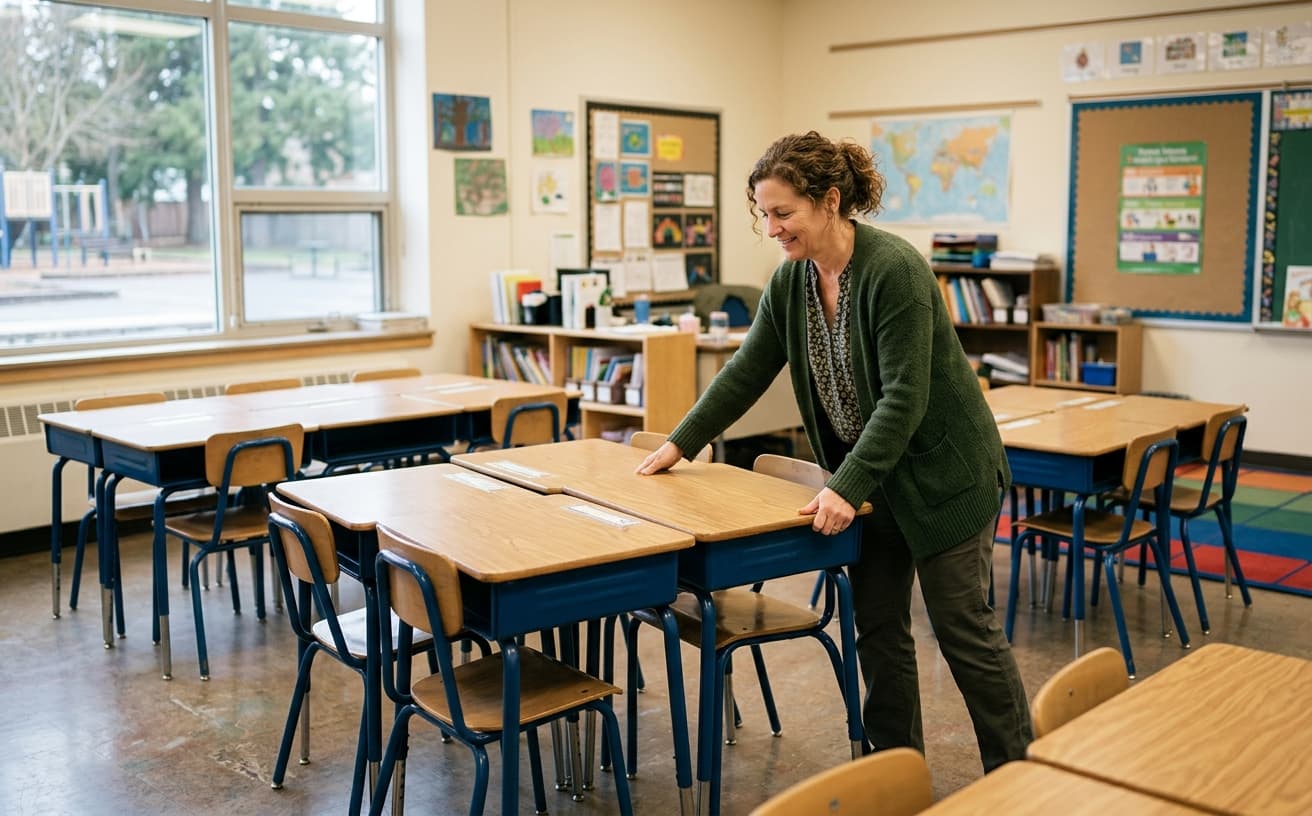
Subs and students during rotation week
Subs should not re-spin unless admin directs a reset — pairs are part of classroom structure. Leave pair names on the board and in the sub folder. Student conflict mid-week: seat separately, do not reopen whole-class spin without you.
- New enrollee: Add name, spin one partner from willing bench or pair with flex triad — welcome publicly.
- Leave mid-week: Remaining partner joins another pair temporarily with your OK or sits in flex until next rotation.
Parent questions: "Why is my child with X?" — Random process explanation plus social skill goal. Avoid claiming spin fixes all behavior; it resets proximity, not personality.
Common questions
How often to switch? Match your instruction — weekly for talk-heavy units, monthly for stability.
Same partner twice? Auto-exclude last round on homepage.
Desks vs tables? Spin partners, then assign physical seats — two steps if room layout is fixed.
Virtual/hybrid? Spin partners for breakout rooms; same fairness norm online.
Desk partner switches keep collaboration fresh without the theater of the teacher secretly engineering every dyad. Spin, pair, teach — repeat next month.
Turn-and-talk frequency: Daily quick talks need stable pairs at least a week — too-frequent switching prevents rapport. Monthly partner switch balances novelty and trust. Match rotation cadence to instructional style.
Lab science pairs: Safety requires trained partners for equipment — spin after safety quiz pass, or spin among students already cleared for lab roles. Randomness within qualified pool preserves fairness and safety.
Writing workshop: Peer revision pairs benefit from mixed confidence — random spins avoid always pairing strongest with strongest. Provide revision checklist so skill gap becomes structure, not silence.
Report to guardians: Partner switch letter home optional — "We rotate collaboration pairs monthly for equity" — prevents "why is my child next to X" emails without context.
Illustrative pairing notes
11
Demo roster pairs
22 students, even count
22
Spins for full pairing
One name per spin, pairs of spins
10–15 min
Typical switch duration
Includes physical seat move
“Announce the triad rule before the last spin — surprise third wheels erode trust fast.”
Need teams of four?
Pair spins build dyads; merge pairs with the quiz team picker workflow for larger groups.
Quiz team picker classroom →Build your own spinner wheel
Paste any list, import a class roster, save history, and share a link — free on the Name Spinner homepage. No account required.
Open full Name Spinner →Related guides
Classroom Group Work Spinner Guide
Assign fair student groups with a classroom group work spinner — visible random teams, no signup, and share links for subs. Demo roster ready to spin.
In-page spinner

By Name Spinner
Classroom Group Generator Spinner
Split a class into random groups with a free spinner wheel. Demo roster included — paste your students on the homepage for fair team picks.
In-page spinner
By Name Spinner
Presentation Order Picker — Random Order for Class
Set random presentation order with a free classroom spinner. Demo roster included — paste your students on the homepage for fair, transparent speaking slots.
In-page spinner
By Name Spinner
Quiz Team Picker — Balanced Groups for Review Games
Form trivia and quiz teams fairly with a free classroom spinner. Demo roster — balanced groups, review games, and no repeat team drama.
In-page spinner
By Name Spinner