
Name Spinner
- Spin for a time signature
Time Signature Picker — Spin a Meter
Spin a time signature picker — 4/4, 3/4, 6/8, and the rest, equal odds. Classroom meters for clapping and listening. No signup.
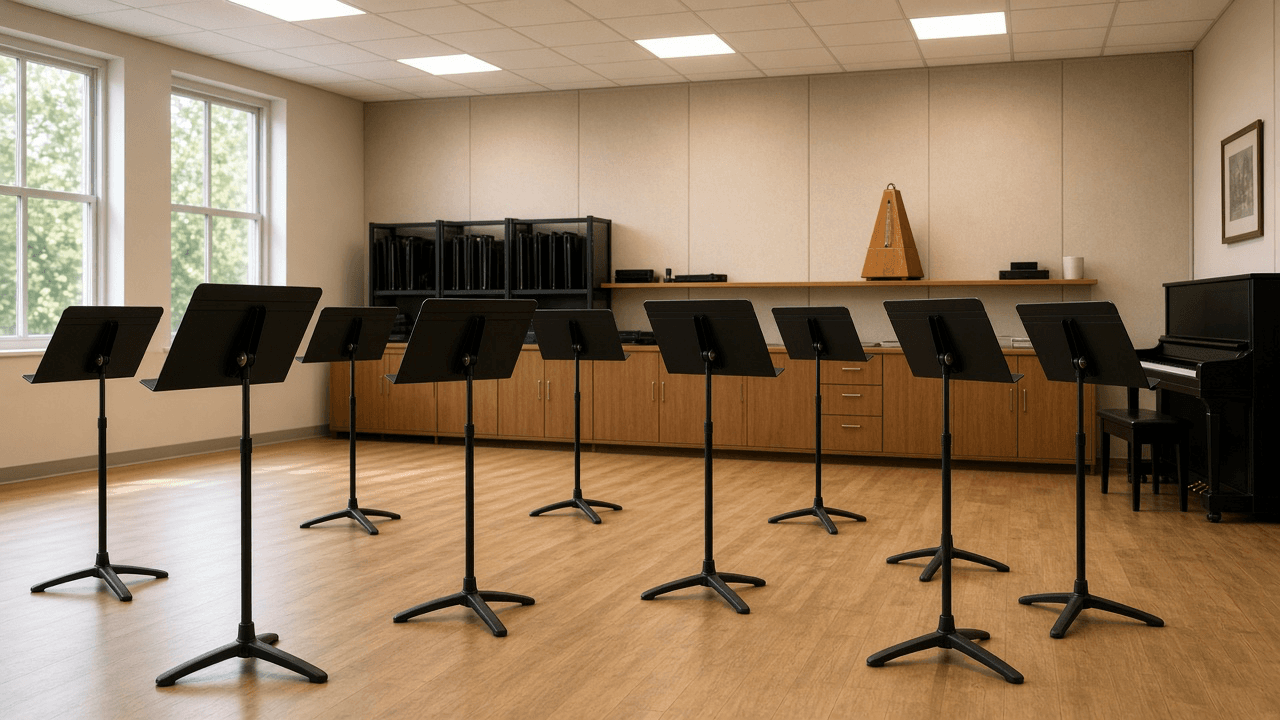
Pick a time signature in one spin
A rhythm warm-up stalls when every student wants 4/4 and nobody wants 7/8. A time signature picker loads ten classroom meters, one slice each, and finishes the choice when the wheel stops. 4/4 and 5/4 occupy the same amount of the wheel. The student who hoped for a waltz still watched the spin.
The list is the meters a general music class can clap, not every signature in a theory book. Five are simple: 4/4, 3/4, 2/4, 2/2, and 3/8. The beat in those divides in two. Three are compound: 6/8, 9/8, and 12/8. The beat in those divides in three. Two are asymmetric: 5/4 and 7/8. 2/2 is cut time. It is not a second copy of 2/4.
How fast or how loud lives on the musical terms picker. Who wrote the piece lives on the classical composer picker. Which style it is lives on the music genre picker. Come here when the question is how the beats are grouped.
Classrooms use the landing as a clapping prompt. Read the meter, clap one bar, and write the counts a beginner could check. Rehearsals apply the meter to four bars the group already knows, so the same piece is not always felt in four. Families spin before a practice block when a child will only play in 4/4.
Ten equal slices means 4/4 can repeat inside a short sample. That clustering shows up in coin flips too. If probability is the lesson, tally the landings and compare them with one-in-ten. Re-spin only when the class has not clapped that meter yet. Hope for 3/4 is not a reason for a second spin.
A meter tells you how the beats are grouped. It does not tell you the speed. Allegro and 4/4 answer different questions, which is why they live on different wheels. Paste a shorter list on the Name Spinner homepage when today's lesson is only 4/4, 3/4, and 6/8.
Time signature session workflow
Step 1. Say the rule before the spin: one spin, one meter. Step 2. Drop meters the group has not clapped yet if this is the first week. Step 3. Spin and let it finish. Read the signature and say whether it is simple, compound, or asymmetric. Step 4. Do the planned block — one bar of clapping, or four bars of a piece they already know.
The wheel does not play the piece and it does not choose the tempo. It names the grouping. If the class wants a familiar meter heavier on the wheel, add it once on purpose. Duplicating 4/4 changes the odds. Do that only when the group has agreed that a heavier segment is the point of the exercise.
Substitutes can run this from the page without a theory lecture. The board note is enough: spin, name the group, clap one bar, stop. Remote groups share the screen and clap on mute, then one student unmutes. A result that half the call did not see will be argued again.
The adult in the room still owns the tempo. A spun 7/8 is not a race. Set a walking speed before the first spin so the odd meter is still countable. Seated clapping is a complete version of the same task.
One class period
Minute 0 — Rule
Read the one-spin rule. Show that simple, compound, and asymmetric meters share one wheel.
Minute 2 — Trim
Remove meters the class has not clapped yet.
Minute 4 — Spin
One spin. Read the signature and name its group.
Minute 6 — Work
Clap one bar or play four bars. Start a tally if this is a probability day.
Share of the 10 names. Each signature is still one slice.
| Group | How the beat divides | Names |
|---|---|---|
| Simple | The beat divides in two | 5 |
| Compound | The beat divides in three | 3 |
| Asymmetric | The bar mixes groups of two and three | 2 |
What to do with the landing
- Clap — one bar at a walking speed before anyone plays.
- Count — say the numbers out loud, then clap only the strong beats.
- Rewrite — take four bars the group knows and feel them in the spun meter.
- Listen — play eight bars and ask whether the recording matches the signature.
- Tempo — spin the terms picker only when the task also needs a speed.
- Probability — compare a set of spins with a one-in-ten chance.
What this wheel includes
10
Meters
One segment each
3
Groups
Simple, compound, asymmetric
$0
Cost
Spins in the browser, no signup
When the result feels unfair
Simple meters can appear several times in a row without the wheel being broken, because five of the ten names are simple. Count the landings on paper before you call it bias. If the group wants only the three meters they can already clap, build that shorter list and spin it. Spinning until 4/4 appears is a different activity, and you should not describe it as random.
A missing signature is a list problem. This page does not include 5/8, 7/4, or the long mixed meters in advanced scores. Add those on the homepage when that lesson is the point. 6/8 is not a faster 3/4. Both can be felt in three, and they are still two slices because the notation is different. Say that once if a student wants them merged.
Use the terms wheel when the goal is a tempo or a dynamic. Use the composer wheel when the goal is a person. Use the genre wheel when the goal is a style. Use this wheel when the goal is the grouping. A spun meter can follow a terms lesson — find the speed, then the signature — but do not force every landing into a worksheet. One bar of clapping is a complete block for a warm-up.
If the room is split between "how fast" and "how the beats are grouped," do not merge the lists. Eighteen markings plus ten meters makes most landings a word before they are a signature. Spin the musical terms picker or this page, not a mixed list, when the group already knows which question is on the board.
“The wheel names the grouping. You still choose the speed, the excerpt, and when to stop.”
Build your own spinner wheel
Paste any list, import a class roster, save history, and share a link — free on the Name Spinner homepage. No account required.
Open full Name Spinner →Related guides
Classical Composer Picker — Famous Names
Spin a classical composers wheel — famous names, equal odds. Bach, Mozart, Beethoven, and the rest for listening labs. No signup.
In-page spinner

By Name Spinner
Musical Terms Picker — Tempo and Dynamics
Spin a musical terms picker — tempo and dynamics, equal odds. Andante, allegro, piano, forte, and the rest for listening labs and rehearsals. No signup.
In-page spinner
By Name Spinner

Art Movement Picker Wheel — Studio Class
Spin a random art movement for studio projects, art history units, and museum trips. Impressionism, cubism, pop art, and more — ten movements ready to spin.
In-page spinner
By Name Spinner
Musical Instrument Picker — Free Class Wheel
Free instrument picker for band units, listening labs, and music class prompts. Ten instruments, equal odds — fair rotation everyone can watch. No signup.
In-page spinner
By Name Spinner