
Name Spinner
- Spin for an emotion
Random Emotion Picker Wheel — SEL & Creative
Pick a random emotion with a free spinner wheel. Classroom check-ins, art prompts, and writing starters — ten feelings ready to spin in your browser.
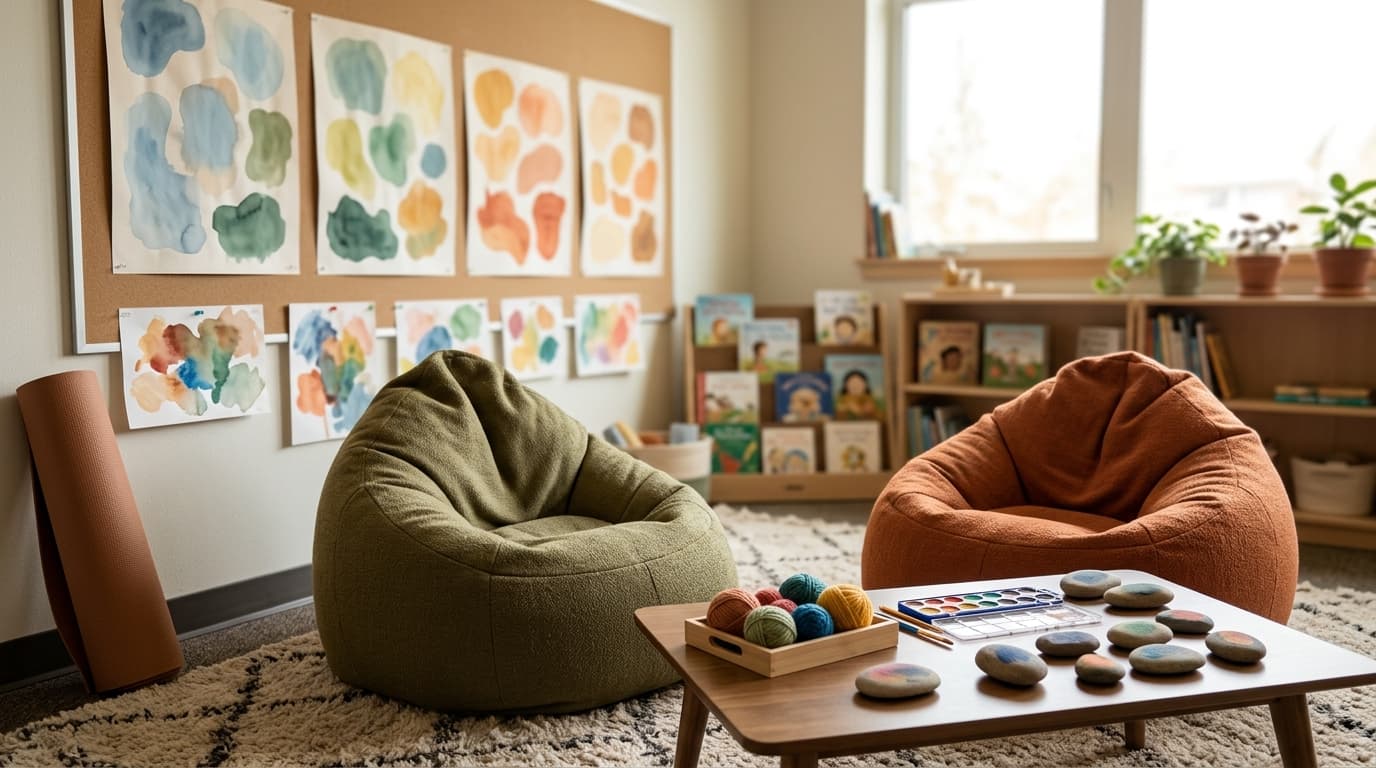
Name a feeling without putting one student on the spot
SEL blocks stall when every check-in defaults to "fine" because naming emotions feels risky in front of peers. A random emotion picker wheel assigns happy, nervous, grateful, or confused in one spin — then everyone explores that label through writing, art, or movement, so no single student reveals private history unless they choose to.
This wheel lists ten broad emotions spanning positive, neutral, and challenging states. Each occupies one equal segment. Counselors frame spins as vocabulary practice, not diagnosis — the wheel picks a word; students decide if it fits today. Art classes spin for color and composition prompts tied to the feeling. ELA spins for six-sentence stories from a character feeling the result.
Remove or replace labels that feel too heavy for your age group on the Name Spinner homepage — swap angry for frustrated, swap confused for curious. Pair with drawing prompt wheel when landed emotion becomes a sketch assignment.
Equal odds each spin — over twenty sessions you may see repeats; use that to discuss nuance: grateful on Monday vs grateful after a loss feel different.
Therapeutic art groups use spin as prompt, not disclosure requirement — participants may interpret abstractly. ESL classes pair landed word with translation and gesture charades — vocabulary sticks faster than flashcards alone. Staff wellness weeks spin during faculty meeting opener — two-minute share, pass always honored.
Restorative circles: Spin opens with a neutral vocabulary word before harder harm discussion — everyone practices the same label before anyone shares impact. Yearbook clubs spin for caption tone — proud vs nostalgic — when writing photo blurbs, keeping voice varied across spreads without mocking subjects.
Emotion check-in workflow
- Step 1: Spin for emotion word.
- Step 2: Define it together — student-friendly glossary on board.
- Step 3: Choose response mode — journal, pair share, movement, or art.
- Step 4: Opt-out always available — pass means observe only.
- Happy / excited / proud / grateful: Share micro-moments from the week without one-upmanship.
- Sad / nervous / confused: Normalize; no fixing required in round one.
- Angry: Channel into boundary-setting scenarios or conflict-resolution role-play — not venting about named peers.
- Calm / surprised: Breathing exercises or "what changed?" reflections.
- Movement option: Statue pose embodying emotion for ten seconds — comedy allowed, mockery not.
- Trauma-informed: Never require disclosure tied to spun word. Offer private journal alternative.
- IEP / 504: Pre-print emotion wheel with visuals for students who need icons.
- Therapists in schools: Spin opens vocabulary; session content stays clinician-led.
- Families: Dinner spin — everyone shares one sentence about when they felt the word this week, pass allowed.

Emotions on this wheel
- Happy — joy, contentment, bright affect
- Sad — loss, disappointment, low energy
- Angry — frustration, injustice, boundaries
- Excited — anticipation, high energy
- Nervous — worry, butterflies, new situations
- Calm — regulated, peaceful, grounded
- Surprised — unexpected news, plot twists
- Confused — uncertainty, needing clarity
- Proud — accomplishment, self-worth
- Grateful — appreciation, thankfulness
Illustrative emotion wheel notes
10
Emotions on wheel
Add hopeful, lonely on homepage for older grades
Yes
Equal odds
One slot per emotion on this embed
~4 min
Typical check-in time saved
Illustrative classroom estimate
Illustrative example only — rounded slot counts, not clinical categories.

Fairness and house rules
Equal odds per emotion each spin when each appears once. If angry feels too triggering for a given class, replace on homepage before lesson — do not single out students when word lands.
No grading feelings. Assess effort on reflection quality, not authenticity performance. Bullying prevention: Spin word cannot target a classmate — stories use fictional names only.
- Repeat spins: Same emotion twice teaches that feelings recur — not wheel bias.
- Cross-curricular: Spin grateful during history — figure who might have felt it; spin nervous during science — before lab safety talk.
- Morning meeting routine: One spin per homeroom week; chart words collected over month — vocabulary wall grows without repetitive prompts.
- Counselor small groups: Custom homepage list with only regulating emotions when group needs stabilization before hard topics.
- Literature links: After reading a chapter, spin and ask which character might feel the result — evidence from text only, no armchair diagnosis of real classmates.
- Music class: Compose eight-bar motif expressing the spun emotion using tempo and dynamics, not lyrics about private events.
Five-minute SEL opener
Min 0–1
Spin; write word on board with student definition.
Min 1–3
Silent journal or pair sentence.
Min 3–5
Optional two volunteers share; transition to lesson.
“Shared random prompts make emotional vocabulary safer — everyone works on the same word, no spotlight on one kid's bad day.”
| Emotion | Classroom task |
|---|---|
| Grateful | Write thank-you to someone not in this room |
| Nervous | List three facts that reduce worry about a test |
| Proud | Describe effort, not outcome |
| Confused | Ask one clarifying question about today's topic |
Common questions
Clinical use? Blog wheel is educational vocabulary — not assessment. Clinicians use professional tools separately.
Younger grades? Replace words with emoji faces on homepage list — same spin mechanics.
Pair with colors? Spin random color picker for art — emotion + color mashup.
Share check-in link? Homepage URL for counselor small groups with custom emotion subsets.
Wheel sounds in class? Keep sounds off in Animation settings — Space to spin still works silently for quick spins.
- Parent communication: Send link explaining spin is vocabulary game, not psychological evaluation.
- Art extension: Landed emotion plus color picker — paint swatch only, no figurative faces required if culture discourages them.
- Crisis days: Skip spin when community grief is fresh — return to wheel when class agrees they want structured vocabulary again.
- Data privacy: Journals stay in notebooks or secure LMS; never photograph student emotion writing for social posts.
- Differentiation: Offer sentence frames for emerging writers — "When I feel ___ I notice ___ in my body."
- Gifted extension: Synonym ladder on board — proud expands to accomplished, validated, self-assured — without changing the spun anchor word mid-lesson.
Exit ticket: One word students would add to the wheel next month — crowdsourced list updates keep vocabulary student-owned.
Build a feelings wheel
Paste your school's SEL vocabulary — zones of regulation, mood meters, or counselor-approved word bank.
Customize emotion list →Build your own spinner wheel
Paste any list, import a class roster, save history, and share a link — free on the Name Spinner homepage. No account required.
Open full Name Spinner →Related guides
Home Room Picker Wheel — ESL & Life Skills
Spin a random room in the house for ESL vocabulary, chore charts, and life-skills lessons. Kitchen, bedroom, garage, and more — ten rooms ready to spin.
In-page spinner

By Name Spinner
Personality Trait Picker — SEL & Writing
Spin a random personality trait for SEL lessons, character writing, and team shout-outs. Kind, curious, patient, and more — ten traits ready to spin in class.
In-page spinner
By Name Spinner
Transportation Picker Wheel — Commute & STEM
Spin a random mode of transportation for STEM lessons, commute games, and ESL vocabulary. Car, train, bicycle, and more — ten modes ready to spin.
In-page spinner
By Name Spinner

Relationship Type Picker Wheel — SEL Connections
Spin relationship types for SEL circles, friendship lessons, and community building. Family, mentor, teammate, and more — ten connection types ready to spin.
In-page spinner
By Name Spinner