
Name Spinner
- Spin for a brain break
Brain Break Picker — Two-Minute Resets
Spin a brain break picker — classroom resets, equal odds. Jumping jacks, deep breaths, and twenty short activities between study blocks. No signup.
Pick a brain break in one spin
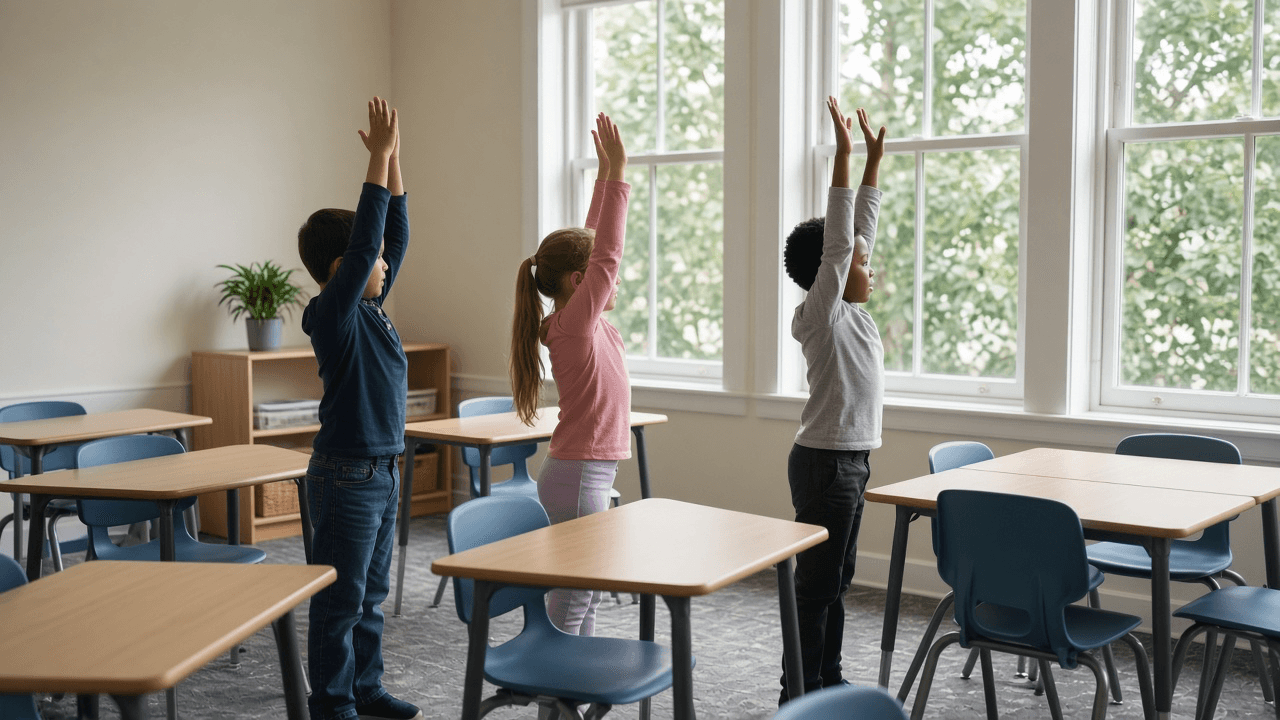
A study block ends and the room argues about what the reset should be. Someone wants to stand. Someone wants quiet. A brain break picker loads twenty classroom resets, one slice each, and finishes the choice when the wheel stops. Jumping Jacks and Silent Count occupy the same amount of the wheel. The student who hoped to stay seated still watched the spin.
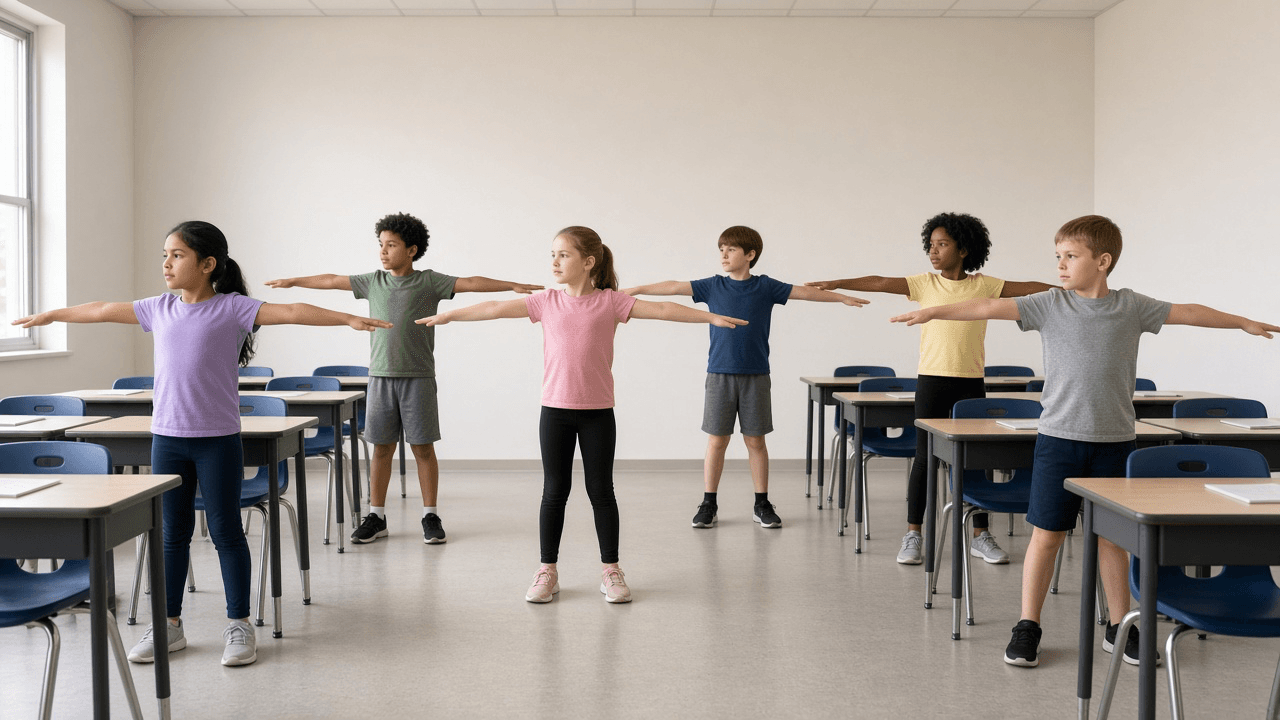
The list is the resets a general classroom can run in about two minutes, not a PE unit and not a study technique. Eight are movement: Arm Swings, Balance Pose, Cross Crawl, Dance Freeze, Jumping Jacks, March in Place, Shake It Out, and Wall Push. Those need room to stand. Six are seated: Desk Stretch, Finger Taps, Hand Squeezes, Neck Turns, Seated Twist, and Shoulder Rolls. Six are calm: Deep Breaths, Eye Rest, Five Senses, Look Far Away, Silent Count, and Trace a Shape. Eye Rest and Look Far Away are both about the eyes, and they stay two slices because one is closed and one is a far target across the room.
How to study lives on the study method picker. Which class gets the next block lives on the school subject picker. Come here when the question is the short reset between those blocks. A workout plan lives on the exercise picker. Recess games live on the outdoor game wheel. This page is the two minutes in the middle of a lesson.
Classrooms use the landing as a whole-room reset before the next problem set. Study halls spin once when the timer hits the end of a block, then sit back down. Families spin between homework subjects at the kitchen table so the break is chosen before anyone opens a new tab.
Twenty equal slices means Jumping Jacks can repeat inside a short sample. That clustering shows up in coin flips too. If probability is the lesson, tally the landings and compare them with one-in-twenty. Re-spin only when the activity is unsafe for the room — a standing break in a space with no aisle, or a balance pose for a student who cannot stand. Wanting to stay seated is not a reason for a second spin when the room can stand.
A brain break is a pause. It is not the next study method and it is not recess. Paste a shorter list on the Name Spinner homepage when today's room can only do the six calm names.
Brain break session workflow
Step 1. Say the rule before the spin: one spin, about two minutes, then back to the work. Step 2. Drop standing names if the room cannot stand today. Step 3. Spin and let it finish. Read the name and say whether it is movement, seated, or calm. Step 4. Do the break, then start the next block without a vote.
The wheel does not teach the lesson and it does not choose the study method. It names the reset. If the class wants a familiar break heavier on the wheel, add it once on purpose. Duplicating Deep Breaths changes the odds. Do that only when the group has agreed that a heavier segment is the point.
Substitutes can run this from the page without a new routine. The board note is enough: spin, name the group, two minutes, stop. Remote groups share the screen, cameras on for the movement names, cameras optional for the calm names. A result that half the call did not see will be argued again.
The adult in the room still owns the space. Wall Push means palms on the wall, not a shove. Dance Freeze stays in one spot. March in Place does not become a lap of the hallway. Set that boundary before the first spin so a movement name is still a reset. A seated version is the plan when standing is not safe. It is not a quiet way to cancel a landing the group dislikes.
One reset between blocks
Minute 0 — Rule
Read the one-spin rule. Show that movement, seated, and calm breaks share one wheel.
Minute 1 — Trim
Remove standing names if the room has no space to stand.
Minute 2 — Spin
One spin. Read the name and name its group.
Minute 3 — Reset
Two minutes, then back to the study block. Start a tally if this is a probability day.
Share of the 20 names. Each break is still one slice.
| Group | What the room does | Names |
|---|---|---|
| Movement | Stand in place for about two minutes | 8 |
| Seated | Stay in the chair and move a small part of the body | 6 |
| Calm | Stay quiet and reset attention | 6 |

Names in each group
- Movement — Arm Swings, Balance Pose, Cross Crawl, Dance Freeze, Jumping Jacks, March in Place, Shake It Out, Wall Push.
- Seated — Desk Stretch, Finger Taps, Hand Squeezes, Neck Turns, Seated Twist, Shoulder Rolls.
- Calm — Deep Breaths, Eye Rest, Five Senses, Look Far Away, Silent Count, Trace a Shape.
What to do with the landing
- Move — stand in place, then sit when the two minutes end.
- Stretch — one slow version of the name, not a contest.
- Breathe — five slow breaths, then eyes open.
- Notice — Five Senses is one thing you can see, hear, or feel, said quietly.
- Study — spin the study method picker only when the next block needs a technique.
- Probability — compare a set of spins with a one-in-twenty chance.
What this wheel includes
20
Breaks
One segment each
3
Groups
Movement, seated, calm
$0
Cost
Spins in the browser, no signup
When the result feels unfair
Movement names can appear several times in a row without the wheel being broken, because eight of the twenty names are movement. Count the landings on paper before you call it bias. If the group wants only the six calm breaks, build that shorter list and spin it. Spinning until Silent Count appears is a different activity, and you should not describe it as random.
A missing activity is a list problem. This page does not include laps, equipment games, or a full PE lesson. Add those on the homepage when that block is the point. Dance Freeze is not a dance class. Both can involve music, and they are still different wheels because one is a two-minute freeze and the other is a style unit. Say that once if a student wants them merged.
Use the study method wheel when the goal is how to review. Use the subject wheel when the goal is which class is next. Use this wheel when the goal is the pause. A spun break can follow a study block — finish the method, then the reset — but do not turn every landing into a worksheet. Two minutes and a return to the desk is a complete block.
If the room is split between "how should we study" and "what is the break," do not merge the lists. Ten study methods plus twenty breaks makes most landings a technique before they are a pause. Spin the study method picker or this page, not a mixed list, when the group already knows which question is on the board.
Cross Crawl is touching the opposite knee, slowly. Five Senses is a quiet notice, not a sharing circle that eats the period. Silent Count is a count to twenty in your head. Trace a Shape is one finger on the desk. None of those need a partner, a score, or a winner. The wheel already made the choice.
“The wheel names the reset. You still choose the length, the space, and when the work starts again.”
Build your own spinner wheel
Paste any list, import a class roster, save history, and share a link — free on the Name Spinner homepage. No account required.
Open full Name Spinner →Related guides

Computer Brand Picker — Tech Literacy
Spin a random computer brand for tech literacy, A+ intro units, and consumer research. Apple, Dell, Lenovo, and more — ten brands ready to spin.
In-page spinner

By Name Spinner
Job Title Picker Wheel — Career Day
Spin a random job title for career units, drama improv, and vocational exploration. Teacher, engineer, chef, and more — ten careers ready to spin.
In-page spinner
By Name Spinner

University Picker Wheel — College Fair
Spin a random university for research projects, college fairs, and geography tie-ins. Harvard, Oxford, MIT, and more — ten schools ready to spin.
In-page spinner
By Name Spinner

Team Role Picker Wheel — Projects & Agile
Spin a random team role for group projects, hackathons, and agile demos. PM, designer, QA, and more — nine roles ready to spin for fair assignment.
In-page spinner
By Name Spinner